How to Go Solar in Sri Lanka
Recently I posted some photos of our solar setup and installation. I was surprised by how many comments I received with people asking me how to do this for themselves. This is my explanation of solar how to go about it and what you need to know. These are the basics. Keep in mind that I am not an electrical engineer, just a guy who does things.
On this page:
- Types of Solar
- Solar System Components
- How Much Energy Do You Need?
- Connection Types and Capacity
- Choosing Installers and Components
- Budget and DIY Alternatives
- Cooling and Aircon Strategy
- Economic Returns
Types of Solar
There are three types of solar installations in Sri Lanka.
1. On-Grid Solar
You have solar panels. These panels produce electricity. You use some of that electricity, and excess electricity is sent back to the national electricity grid, and your electricity provider (CEB or LECO) pays you per unit of electricity generated according to their tariff schemes and structures. This is the most common setup for solar in Sri Lanka.
2. Off-Grid Solar
Off-grid solar systems do not use a grid connection. You have solar panels that produce electricity. The charge generated by these panels you use during the daytime and whatever excess electricity is sent to batteries for storage. And these batteries are what your home runs off of when those panels aren’t producing.
3. Hybrid Solar
Hybrid systems have a battery and also retain a grid connection. So that if for whatever reason you need a huge amount of electricity, you can still import from the grid. You can also export to the grid.
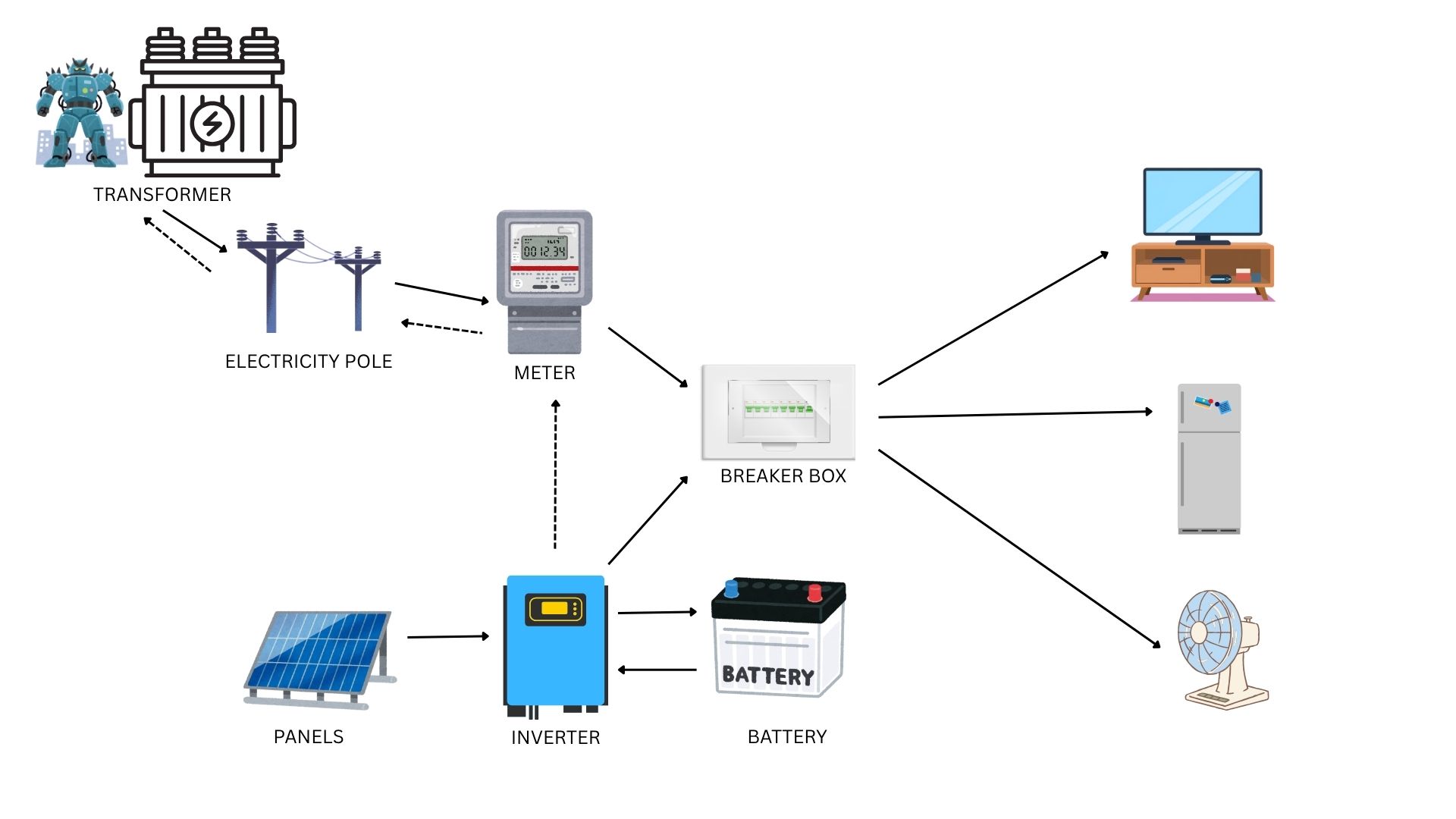
The reason I want to start with this terminology is that the terms are not used very clearly in Sri Lanka and can often lead to confusion. Some installers call on-grid solar hybrid. If you have a battery, whether it’s connected to the grid or not, some installers will call it off-grid. But the word off-grid literally comes from the movement to disconnect from state and large-scale infrastructure providers and be self-reliant. I want to be clear about what I’m talking about in this blog post.
Solar System Components
Now that we’ve got the terminology out of the way, let’s discuss what a solar system actually is and what goes into it. A solar system is basically three components:
Solar Panels
Installers call them photovoltaic (PV) modules. When the sun’s rays hit these panels, they generate direct current (DC). Surprisingly, solar panels are the simplest part from the user perspective. Almost all panels are from China and come with 10- to 25-year warranties. Install them, clean them occasionally, and that’s basically it.
Inverter
An inverter is an electronic unit that takes DC from the solar panels. This DC can vary - after all, solar panels produce less current when there is less sunlight and more current when there is more sunlight. The inverter converts this into AC power that is then given to your home.
The inverter is really the hero of this piece. It converts solar DC into usable AC electricity, handles the battery (knowing whether it has current, what charge it is, even what temperature it is and what speed to charge it at), regulates things so that you get the voltage that you actually need, and handles exporting electricity to the grid. In short, inverters act as the brains of this whole setup and do a whole lot of complex switching maneuvers that you would otherwise have to do yourself by manually flipping breakers and testing currents.
Batteries
Batteries store electricity for later use. They primarily come in three types:
Lead-acid - essentially what you find in non-electric car batteries. Very cheap, readily available, easy to recycle, and well-understood technology. They were one of the earliest heroes of solar power, because they meant you could cheaply and easily store electricity at home. However, lead-acid is far from ideal for solar. They’re not built to discharge the kind of wattages over the kind of periods we use at home, and they’re not meant to really discharge below fifty percent of their capacity without ruining the battery. Yes, there are deep-discharge variants similar to the ones on boats and ships, but this is still lipstick on a pig. The technology is not fundamentally meant for this; it’s very good at what it’s actually supposed to do, which is give a starting charge to an internal combustion engine.
Lithium-ion - these have skyrocketed in prominence because they are widely used in phones, laptops, and electric vehicles. As a result, costs have dropped substantially and the technology has improved. When weight, size, and energy density are critical, lithium-ion is a pretty good choice. They can store a lot of energy in a very small space.
LiFePO4 (lithium iron phosphate) - these have lower energy density than lithium-ion, which means you need more volume to store the same amount of energy. But they have very good thermal stability (highly unlikely to overheat) and a longer cycle life; they can be charged and discharged significantly more often. Which is critical for home use. Over time, these have become the standard for home solar.
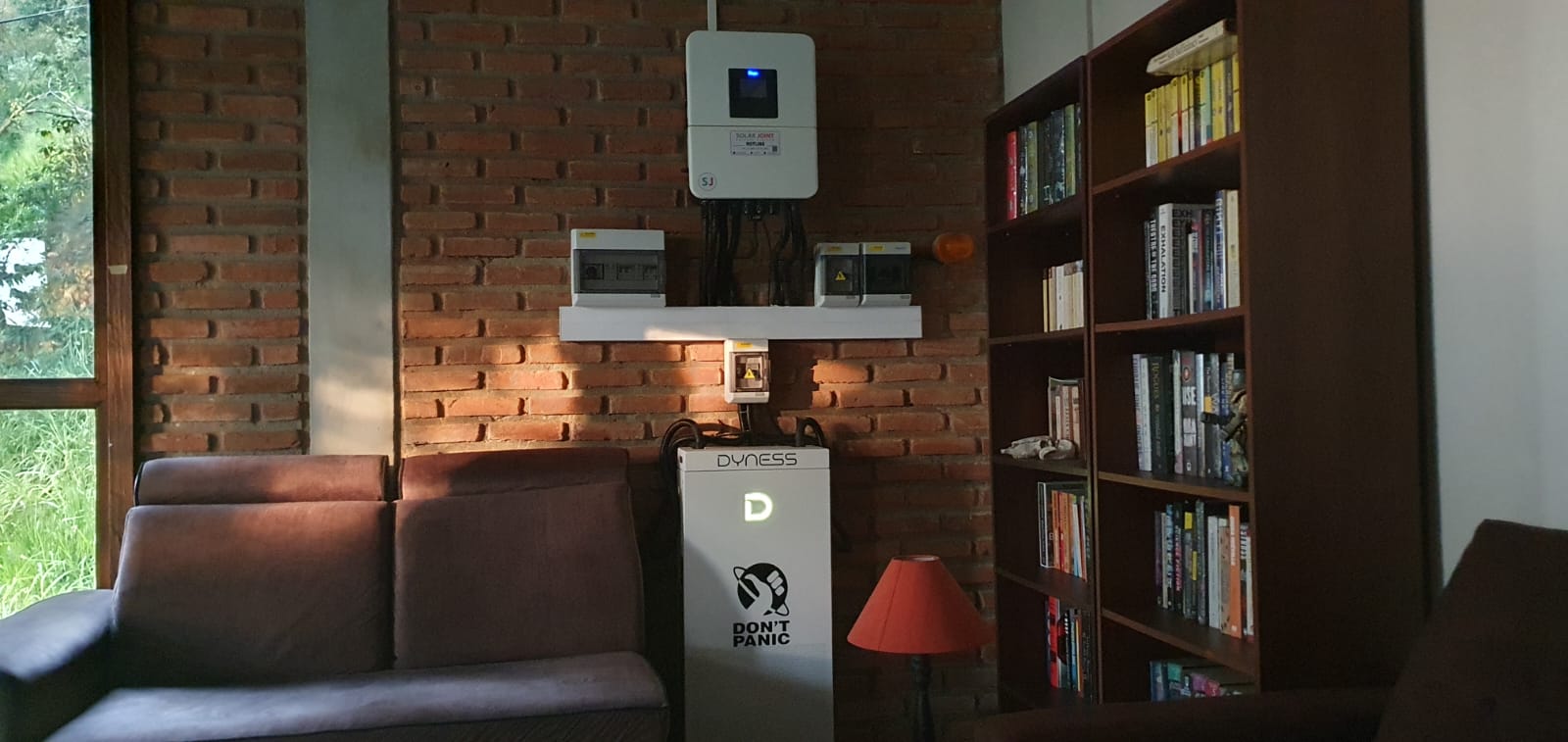
When finally set up, the stuff that you interact with looks like this. This is our Deye inverter and with the Dyness PowerBrick 4.3 kWh battery.
And here’s what it looks like when running.
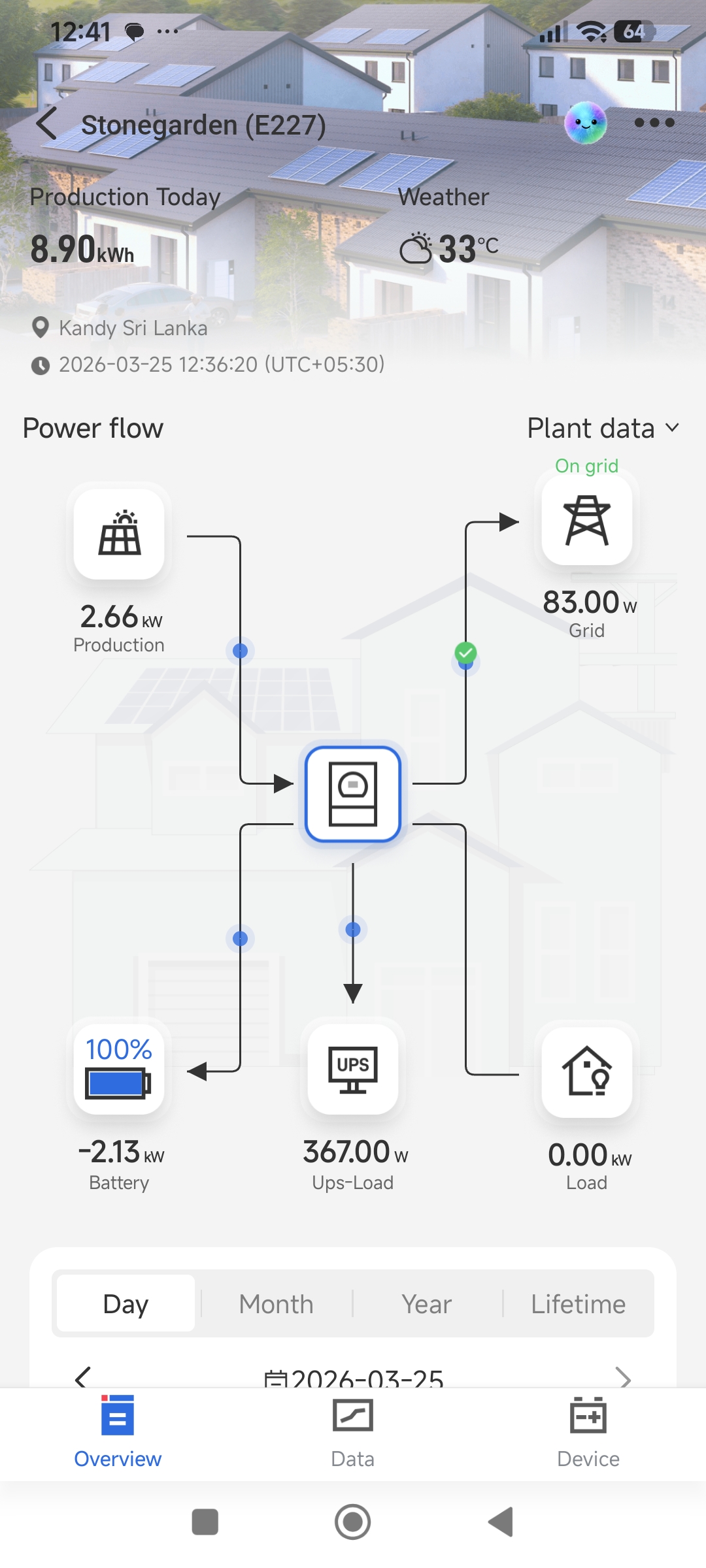
As you can see here, the panels are generating electricity. They’ve topped up the battery. And we are able to maintain an uninterrupted power supply load so that when the inverter switches we don’t have a disruption.
How much energy do you need?
The first thing that you should do is try and calculate how much energy you actually use. A really easy way is to look at your electricity bill.
A unit of electricity is one kilowatt hour - that is one thousand watts used for one hour. That’s the standard unit measured by your meter. Your electricity bill in units will tell you how many kilowatt hours you consume. Your solar system has to give you at least this amount per month.
However, this is a monthly average. Things get very interesting here because we don’t consume electricity at the same rate all the time. There’s another figure you need to know: your peak electricity consumption - how much would be consumed if you plugged everything in at the same time.
You will be surprised by what actually consumes electricity. Some examples:
- Modern MacBook (M1 or newer): ~15W for light tasks, up to 70-90W under heavy load. You can browse Facebook for about sixty hours to rack up a single unit.
- A dedicated writing station: My low-power writing setup — an Android handheld, keyboard, and monitor — draws just 24W at full tilt, 10W without the monitor. Barely a light bulb.
- Refrigerator: a relatively new one runs for about six hours on a single unit.
- Desktop computer (idle): roughly a unit per six hours - though my GTX 4080 Super setup sips power while my wife’s 1080ti uses more.
- Electric kettle: 1,500-1,800W. Run it for an hour and you’re using one and a half to two units.
- Rice cooker, oven, water heaters: power-hungry beasts.
- Air conditioners: consume insane amounts of power.
Look at your household, how many devices run at once, and how many you reasonably expect to run. Idle draw may be 250-450W; peak can reach 2.9kW or more. Whatever you’re planning to get should be sufficient to handle your needs.
Connection Types and Capacity
If you don’t want to do this math, look at the type of connection that you already have:
| Connection type | Voltage / Amperage | Max draw |
|---|---|---|
| Single-phase residential (standard) | 230V at 30A | 6,900W (6.9kW) |
| Single-phase (Colombo / Kandy) | 230V at 15A | 3,450W |
| Three-phase 30A | - | 22,800W (22.8kW) |
| Three-phase 60A (industrial) | - | Your problems are beyond my capacity. Hire someone. |
If you can run AC, an electric kettle, and a rice cooker at the same time without tripping a breaker, you likely have a three-phase 30A connection. Some very efficient AC units can reduce load, but this is still a useful rule of thumb.
Choosing Installers and Components
Start looking up solar installers in Sri Lanka. There are many - even big companies are getting into it now. Installers routinely advertise on Facebook with panel, inverter, and battery combos.
Picking an inverter
The first thing you should look at is what brand of inverter they’re offering. Not all inverters are created equal. There are cheap ones that won’t switch over properly or will burn out. There are very expensive ones with sophisticated dashboards. It can be hard to tell the difference.
My hack has been to look up two forums:
- r/SolarDIY - full of valuable information but often very U.S.-centric, so brands and prices won’t always translate. Nevertheless, it’s a very good place to educate yourself on the issues you’ll have to think through.
- PowerForum.co.za - a South African forum where users discuss solar setups, reliability issues, and equipment. The great thing is they tend to get the same Chinese brands we do. If you’ve never heard of Deye or Goodwe, go look them up here. The users tend to be both sophisticated and happy to experiment in search of a good deal.
My rule of thumb: if a solo installer offers a good deal on an inverter and battery but neither you nor PowerForum recognizes the brand, avoid it. If a little-known brand has a decent deal and some old geezer on the forum says they’ve run it reliably for years, that’s better evidence.
For an inverter, the first priority is reliability. App support and Wi-Fi are nice, but reliability is key. Ideally choose systems with five years of real-world operation behind them.
Picking batteries
The same advice goes for batteries. Americans might be talking about Tesla Powerwalls - find something broadly similar in spec. Most providers will offer lithium-iron or LiFePO4 batteries. Stick to those. There are providers who will set up lead-acid batteries for you (aka ‘the guy’), but I’d strongly recommend against it.
Getting quotes
Based on this, start calling various providers, explain your needs, and ask for quotations. The good news is that most of this equipment converges around similar power targets - lots of five kilowatt inverters, lots of ten kilowatt inverters, lots of ten-kilowatt batteries. Things are roughly comparable. Systems aren’t handcrafted specifically for you; they’re modular, and you mostly find the right combination of Lego bricks for your needs.
Let the provider tell you how many panels you need. Everybody will offer relatively high quality panels that perform roughly on par with each other at the same price point. They’ll also give you more panels than you think you need - because panels don’t generate their nameplate maximum all day, every day. You need enough that even on a cloudy day you’re still generating enough to cover your needs.
From my days in PC building and computer hardware: always give yourself a little excess capacity, particularly for battery storage. Everything degrades over time. You don’t want to cut so close to the power limit that in five years you’re constantly a few hundred watts under.
My setup
- Panels: JA Solar 615W × 10
- Inverter: Deye Hybrid 5kW
- Battery: Dyness PowerBrick 14.3kWh
- Total cost: ~1.9 million rupees (the battery and inverter are the single most costly components)
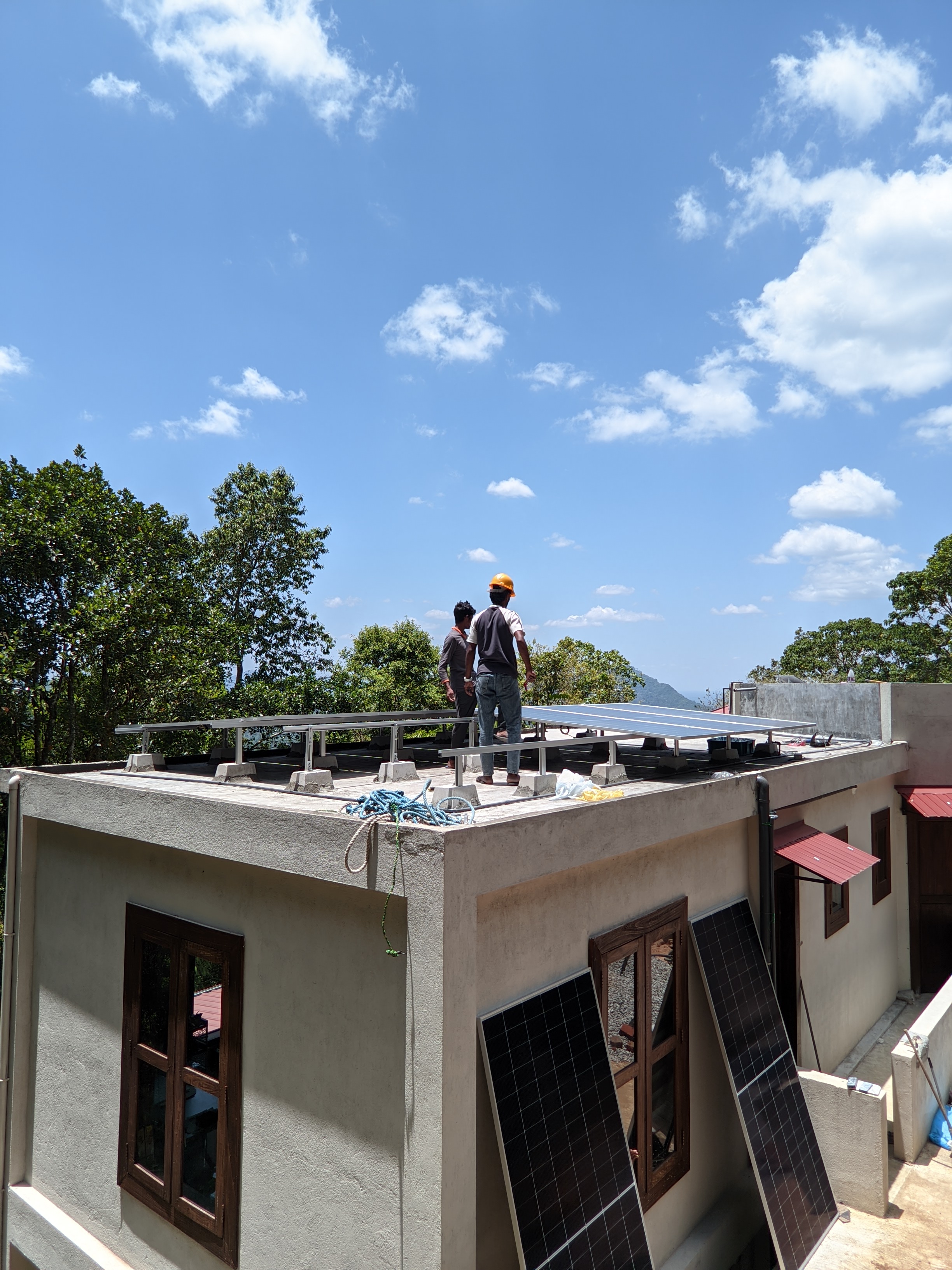
All of this cost has to do with the system or the parts we mentioned it. Some of it went to wiring, cabling, setting up the panels or frames on my slab, because I don’t want anything screwed into my roof. So there’s a little bit of extra expense in there - perhaps a hundred thousand rupees worth.
As far as things go, my setup is modest. This is more than enough for our needs. Our grid draw has reduced to 90 watt-hours (0.09 units) from roughly 300 units. During the day we run off panels; at night we switch to battery. If it falls below fifty percent, it draws from the grid to charge itself back up. The battery tops itself up by 10 a.m., so we have a very nice reserve at all times.
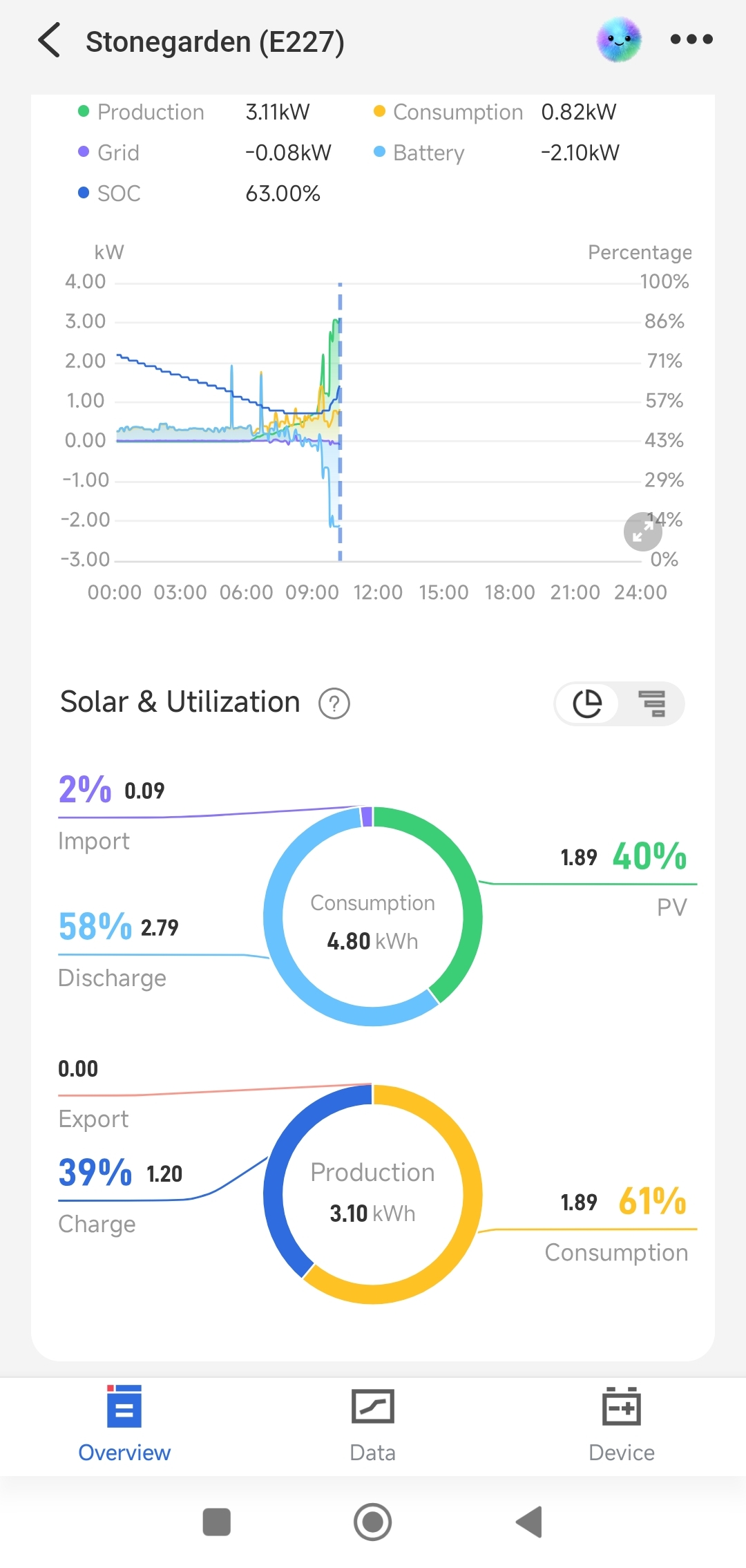
Power consumption looks the way it is because we have over the years pursued reducing energy use. Not to extreme hermit levels, but to degrees that make us more robust to national systems failure.
Your requirements will vary. If you run aircon through the night and want maximal grid independence, you will need more battery.
Installation
This part is fairly simple and expensive. Select a provider based on cost or customer service - I prefer to select based on customer service. You throw some money at them, they come over, they set up the whole thing. Takes about a day, and at the end of it your plug sockets will be working and you won’t really notice a thing.
Warranties to expect:
- Panels: 10-25 years
- Inverters: 5-10 years
- Batteries: ~10 years
I’m going to ask again: avoid the sketchy guy that a friend-of-a-friend knows, the one who will cobble together batteries and a makeshift installer kit. You need real warranty. I had a friend who went with the guy for his small business office because he thought the big companies were a waste of money. His inverter blew up a few months in, his batteries are dying, and he has no warranty.
What about CEB permission?
Let me dispel a tiny myth: CEB permission is not required to install solar. The so-called CEB permission is actually for net metering - the process by which you export excess generated electricity to the grid. For this, there has to be availability at your local CEB transformer, so that they can redistribute that energy. In return they pay you to your bank account. That is what they’re giving you permission for. And that takes some time to get. The process is convoluted and annoying.
However, CEB cannot stop you from connecting equipment for self-use. That does not stop you from connecting an inverter, solar panels, and batteries to your home - provided you are not exporting energy back to the grid. A good inverter has a zero export mode, which you can easily enable. It’s literally just a software setting that your provider can configure.
Budget and DIY Alternatives
Not everyone needs a full 1.9-million-rupee setup. Here’s the progression from cheapest to more capable:
Level 1: Power banks + portable panel My first real brush with solar came during the aragalaya - just before, actually, when we started having those massive thirteen-hour power cuts. I basically started buying a bunch of 20,000-30,000 mAh power banks and a folding portable solar panel with USB output to keep them charged. Some of my friends thought I was going insane, but it meant I had a phone and could keep my laptop going.
Level 2: Solar generator Sometime in 2020 I acquired an Ecoflow River Pro - essentially a big power bank for camping, in the same class as devices from Jackery or Anker. It has enough power to run a fridge for a few hours. These are called solar generators because they can also take solar input.
When Cyclone Ditwa came with landslides, it took out a couple of houses below us and cut electricity, water, the works. I had some 100-watt outdoor solar lights with separate panels, and with a bit of wire and a pair of pliers I disconnected the panels and hooked them into my River Pro.
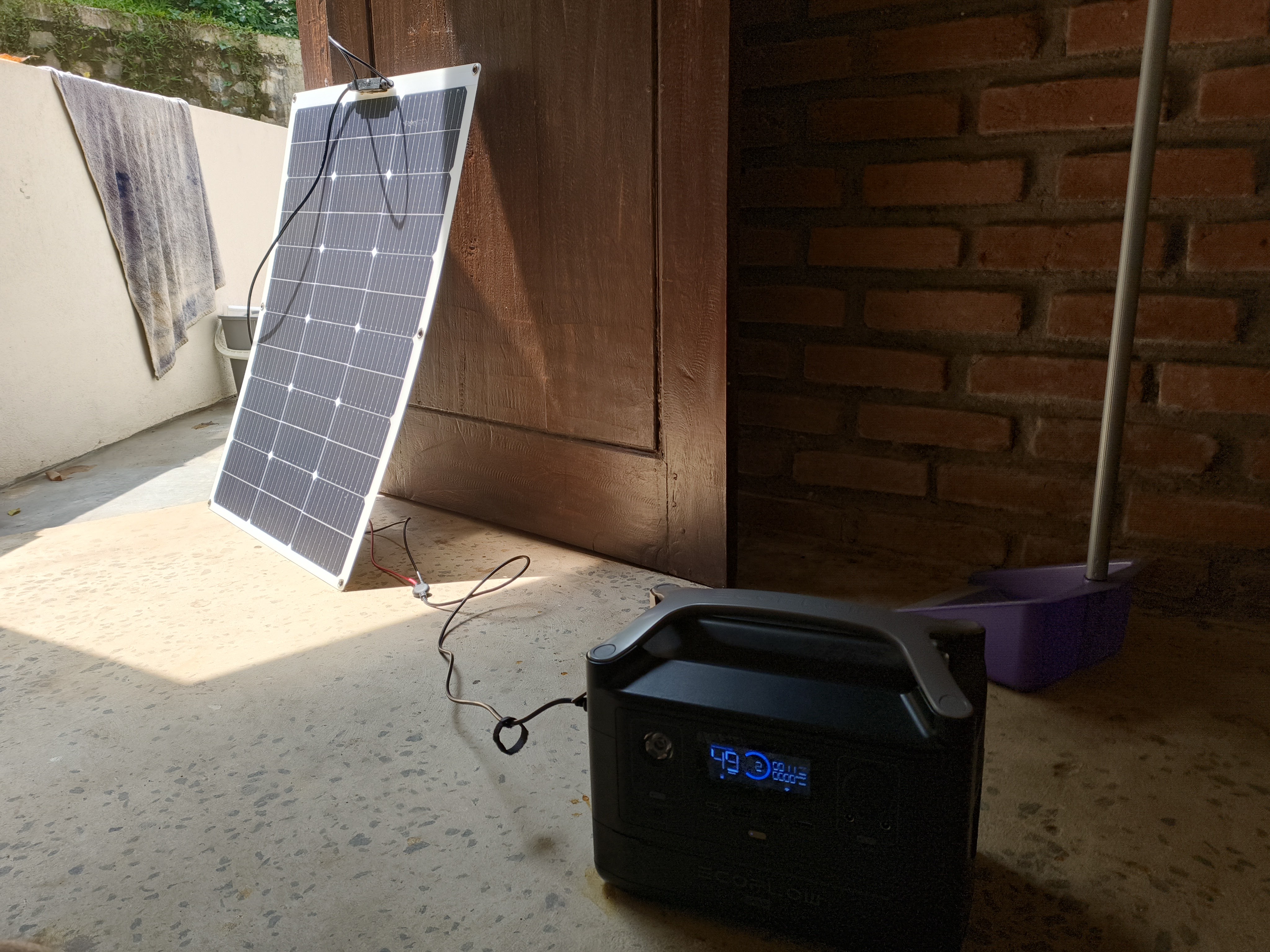
Obviously you don’t have to fiddle with leftover parts. You can just buy a solar generator and panels. This will typically run a couple of bulbs, a small fridge, and keep a laptop charged. So where you can get them, I’ve seen them most often on Dallas. then if you can find electronic stores they should have them. It might be worth taking a trip to Unity Plaza.
I am the type of person who has backups for backups; so my Ecoflow, to this day is still charging and tops up daily; it now sits in a nice cabinet and pulls power from the same panel, except roof-mounted, and also from the mains on a schedule run by a smart plug on a timer. It is my emergency battery reserve, should one set of batteries fail. I also have a petrol generator. So there are backups for the backups for the backups.
Level 3: DIY system There’s a brand called PowMr on Daraz that will sell you panels and an inverter, and you can find deep cycle batteries from brands like Outdo on Daraz. You hook up the leads from the panels into the inverter. It’s pretty simple.
However, a word of caution: I’m not endorsing Daraz, PowMr, or deep-cycle batteries. If you look up PowMr reviews on the forums I mentioned, you’ll find they’re basically rebranding low-tier OEM components; don’t expect anywhere close to the stated figures in actual use.
This is significantly cheaper, but significantly riskier that doing things the way I did. Example here’s a screenshot from the solar DIY forums. To my untrained eye this looks like instead of wiring four twelve-volt batteries in parallel, they’ve actually wired two sets of twelve volt batteries in a series. Meaning this is a twenty-four volt system. It might work fine for the inverter, but I don’t know if this is what they set out to do.
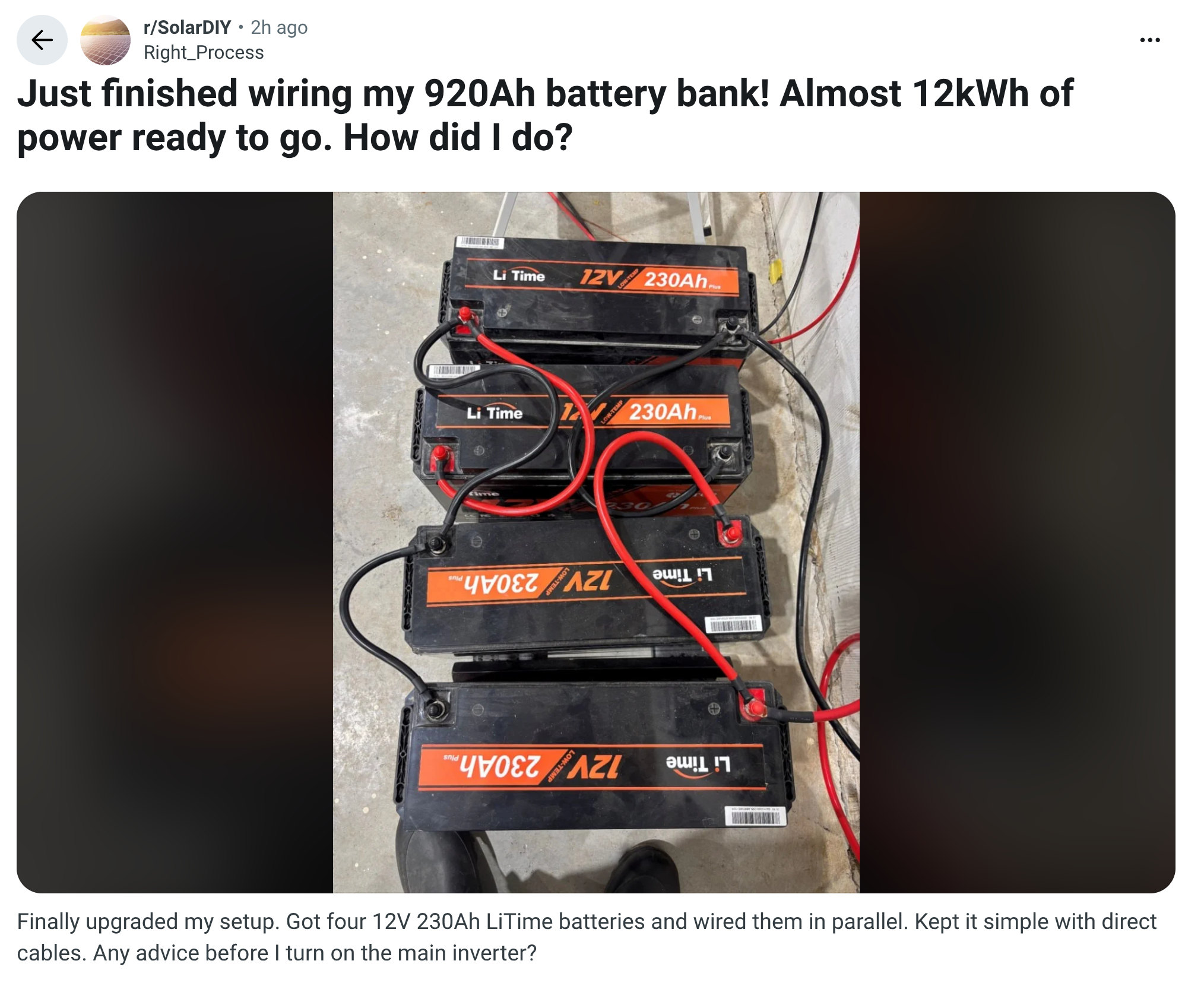
Stuff like this can do serious harm to you and the equipment. Your battery setup and anything involving your home electricity supply should definitely be done by an electrician unless you’re supremely confident, because otherwise you’re going to end up killing yourself.
But a reasonable system can theoretically be done for 400,000-600,000 rupees, as of the time of writing.
The best resources I can think of are the DIY tutorials from Unbound Solar. Of course, Unbound sells stuff, so they have a vested interest in pushing their products; also they’re not available in Sri Lanka. But it is a decent one stop shop for things that you should read about if you’re going the DIY route. You can read the stuff which goes from planning to system design to installation to monitoring and maintenance and then make appropriate choices from the local market.
But I need aircon
There’s no real way around this. Air conditioning is one of the most energy intensive things you can do. You can either bite the bullet, you know, figure out how much energy you actually consume and go for an inverter with more capacity, batteries with more capacity, and possibly a larger bank of solar panels. Your setup is going to have to scale, which means throwing more money at the problem.
But before you invest heavily in batteries, maybe look at what passive cooling methods you can adapt:
Curtains and window film - great for windows where you’d like light but want to keep heat out. When we lived in Colombo, we used frosted glass UV-block window sticker rolls. They go on with just a bit of water (no glue) and reflect some light back. They worked. They didn’t work wonders, but they did significantly cut down the greenhouse effect at home. And they also kept the environment sealed, so the aircon could work.
Roof insulation - I have a slab roof on my study that gets a huge amount of sunlight. Here’s what I tried, in order:
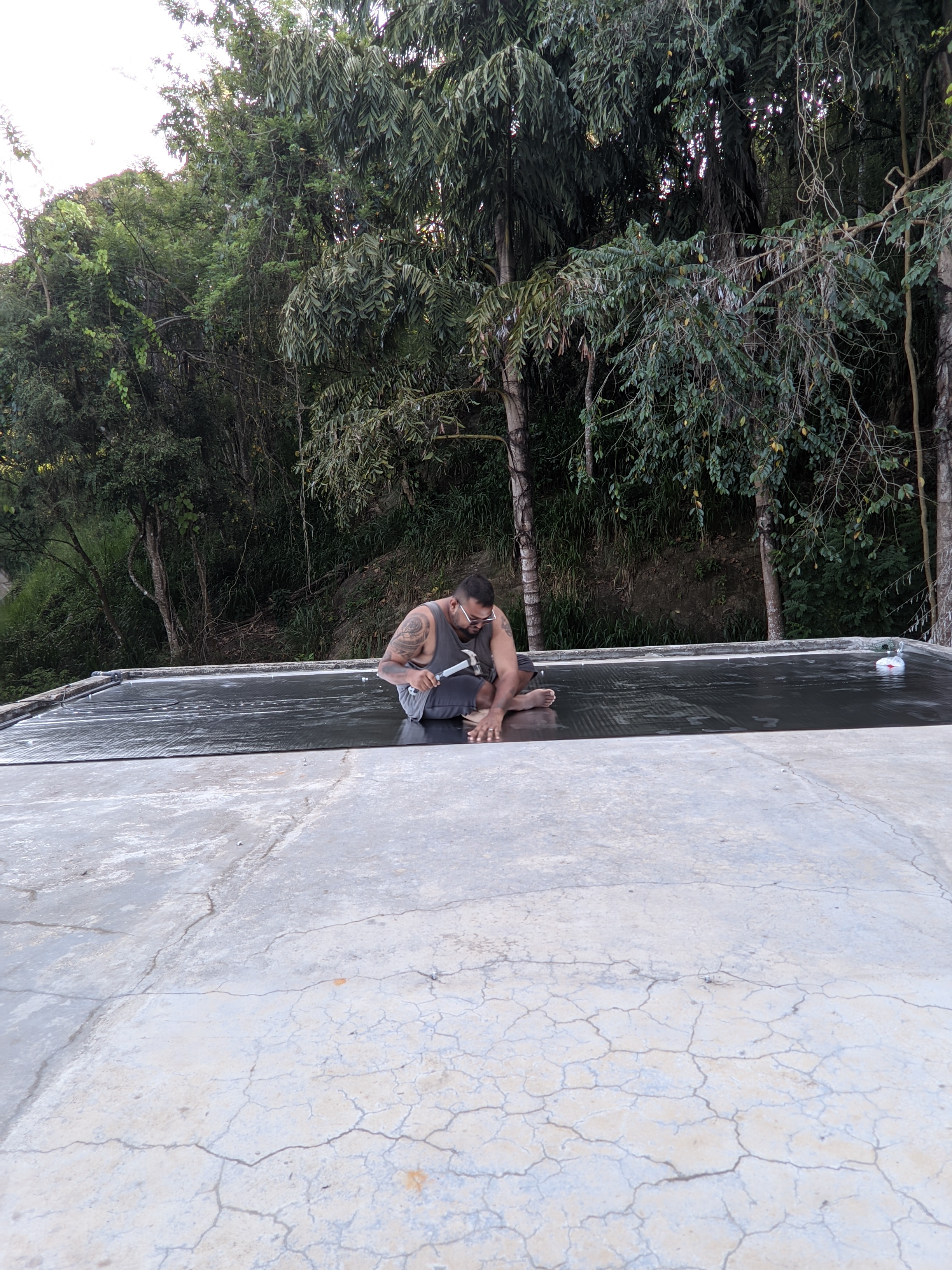
- Mylar: thermally reflective material, the stuff used in emergency blankets. I attached it to the top of the slab with cable clips. It instantly dropped temperatures - but one good rain and the reflective surface, which is about nanometers thick, washed straight off.
- Shade net: dropped temperatures a bit, maybe three degrees.
- Aluminium insulating foil: MacBurton’s double-sided aluminium foil, 75m², cost 18,750 rupees and is available at most local hardware stores. Clipped to the roof, indoor temperatures dropped by about 5°C even in today’s heat. I’m comfortable in here at barely 27°C.
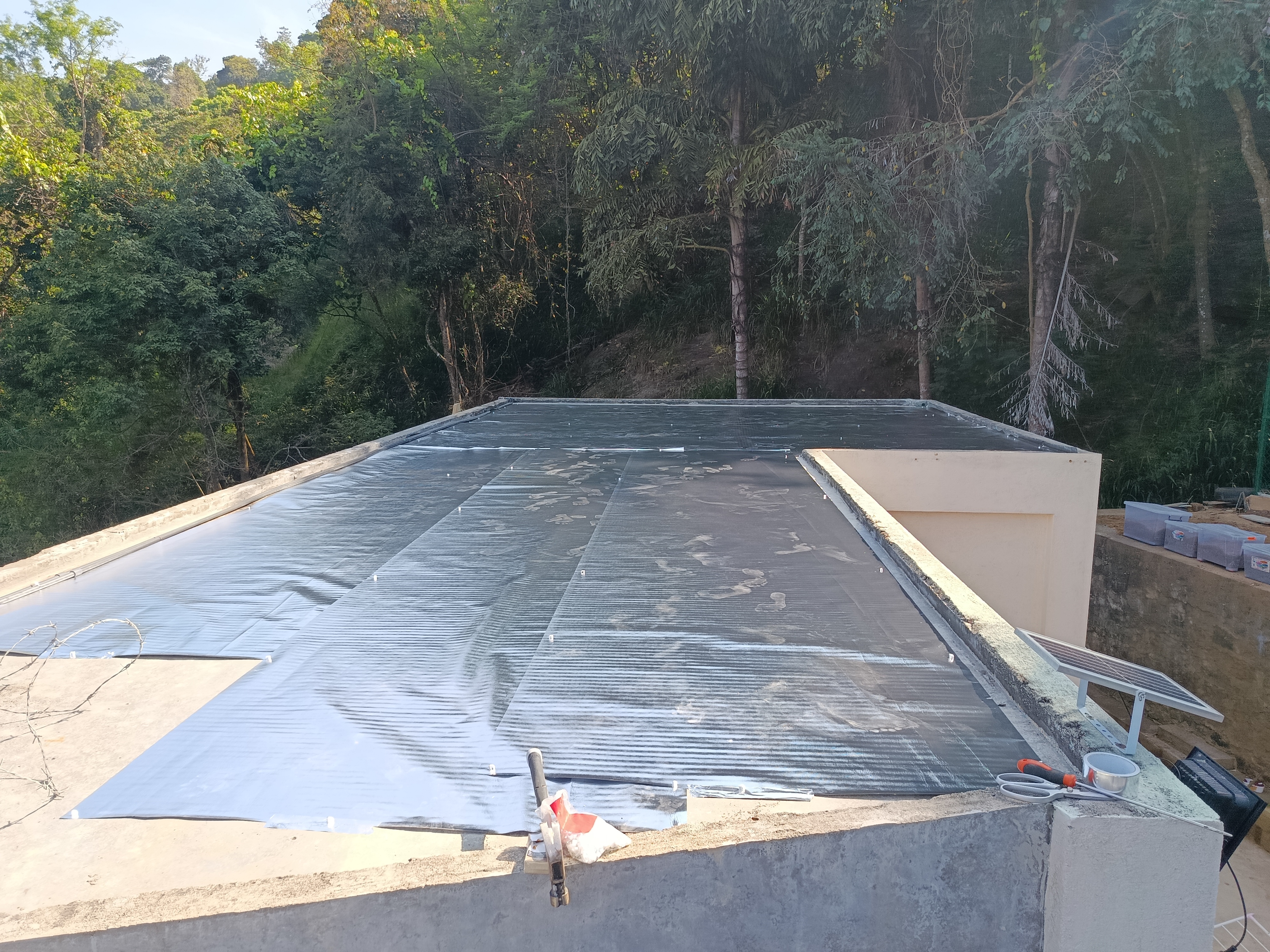
A more advanced version would involve XPS foam - a dense, closed-cell foam that, last I checked, cost about 1,700 rupees for 2ft × 4ft panels at 50mm thickness. It doesn’t flake and is moisture-resistant. If you laid down XPS foam and put foil on top, you’d have excellent insulation. I haven’t done it though, so you will have to do it and figure it out. And if you do, please tell me so I can update this post.
Upgrade your aircon - if you don’t have inverter aircon, inverters are worth it. Replacing older air conditioners with more efficient models is absolutely worthwhile. You’ll need to research this for your own setup.
Economic Returns
Few people ask about returns and how much money you can make as an investment. I’m not net metering; CEB has yet to give me permission because, surprise surprise, transformer capacity.
Even if I were net metering, it’s not a great way to get rich quickly at current tariffs.
But this is not mainly about returns. The whole point is to be free of a fragile grid that is increasingly troubled and breaking down - both due to internal political events and global catastrophes. I want to be as independent as possible from the cluster of mismanaged idiots known as the CEB.
Is it worth it for putting money in my pocket? Probably not. Is it worth it for the peace of mind? Absolutely.