The beginnings
When I was 15 I decided that I would one day build a cottage somewhere far away and fuck off into a world where I didn’t have to worry about rent. I had Rs 200 in my account. My back-of-the-school-notebook projections were to hit this phase by the time I was 55. By the end of 2019, I had enough to buy 186 perches (1.16 acres) of mountainside in Kandy. Thanks to my writing, I’ve been able to beat my own deadline by 25 years, with house money to spare.
Finding land was an exercise in frustration and some good lessons about land scams. We went halfway across Sri Lanka before ultimately settling on Kandy: it fit the criteria we needed - climate proofing for up to 2 Celsius rise, lower humidity and less smog (more breathable air than in Colombo), plus easy access to hospitals and transport.
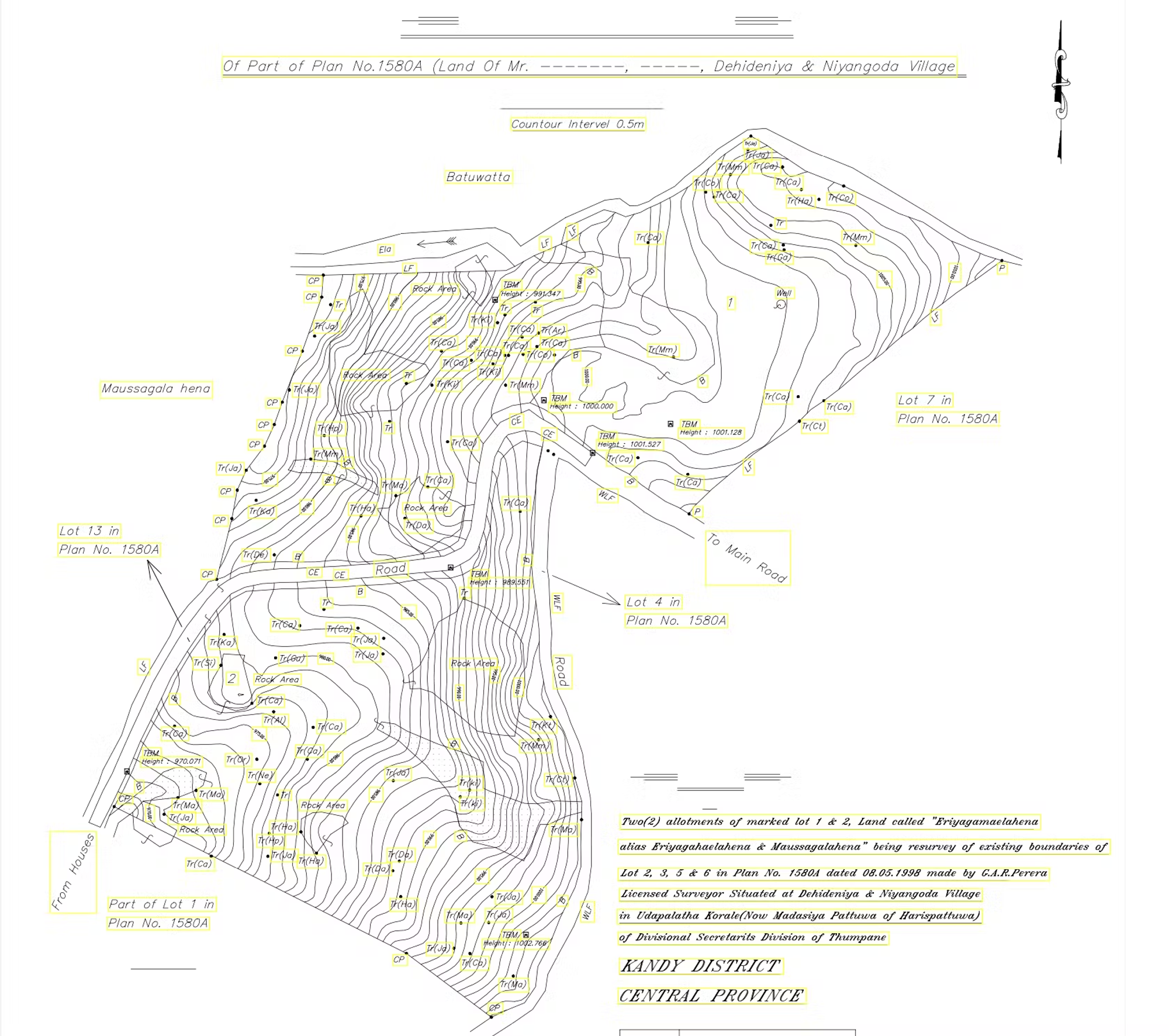
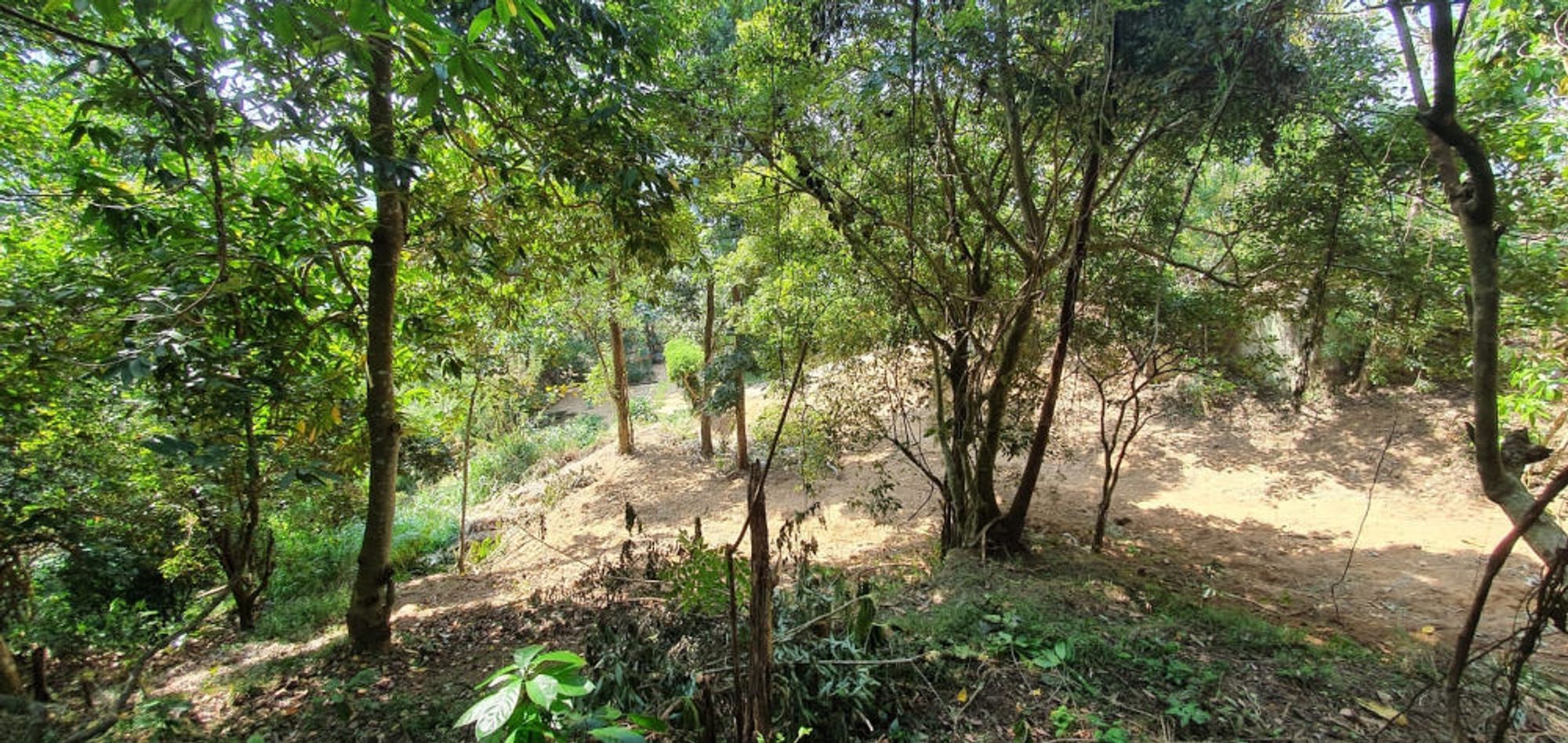
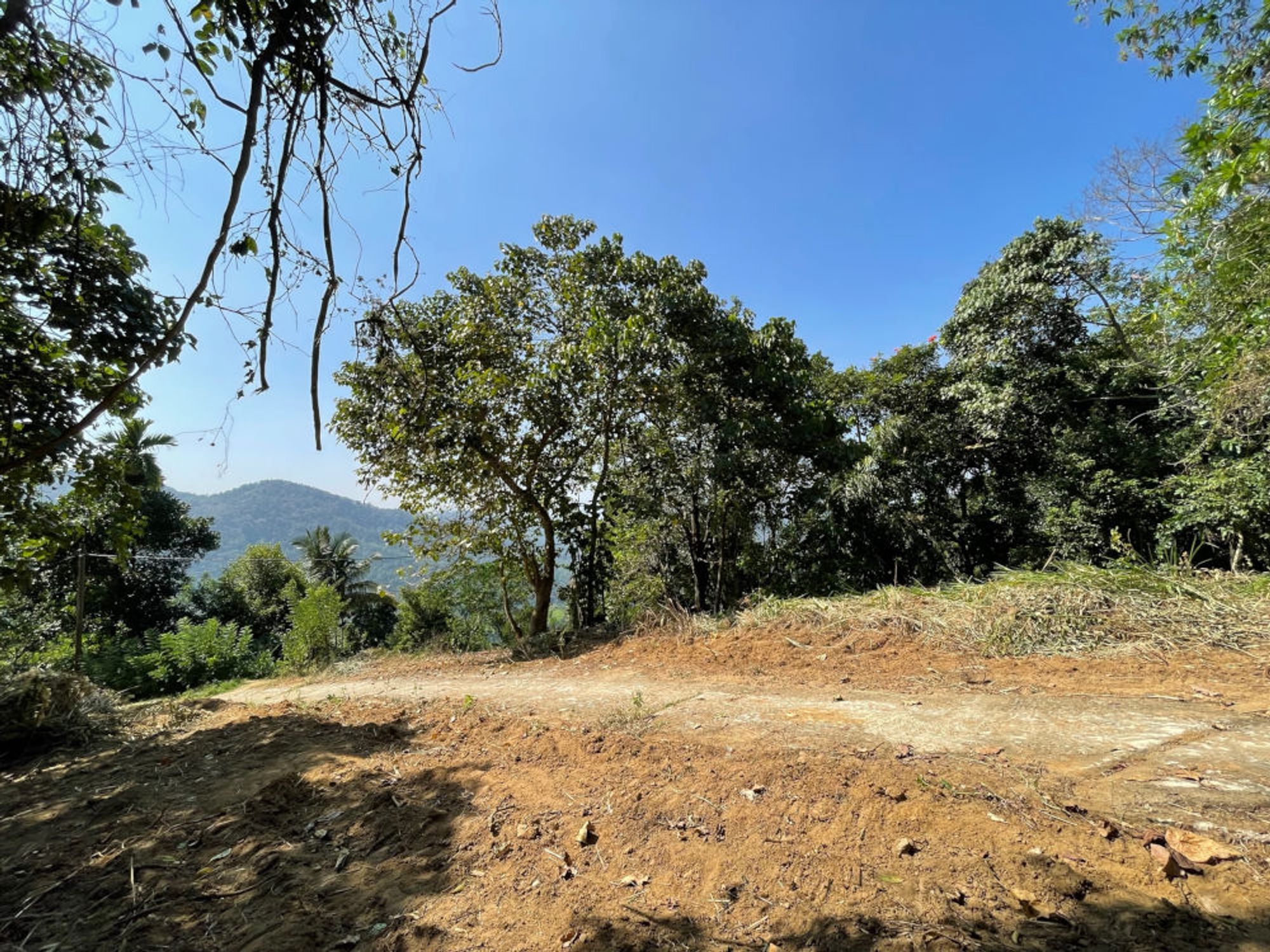
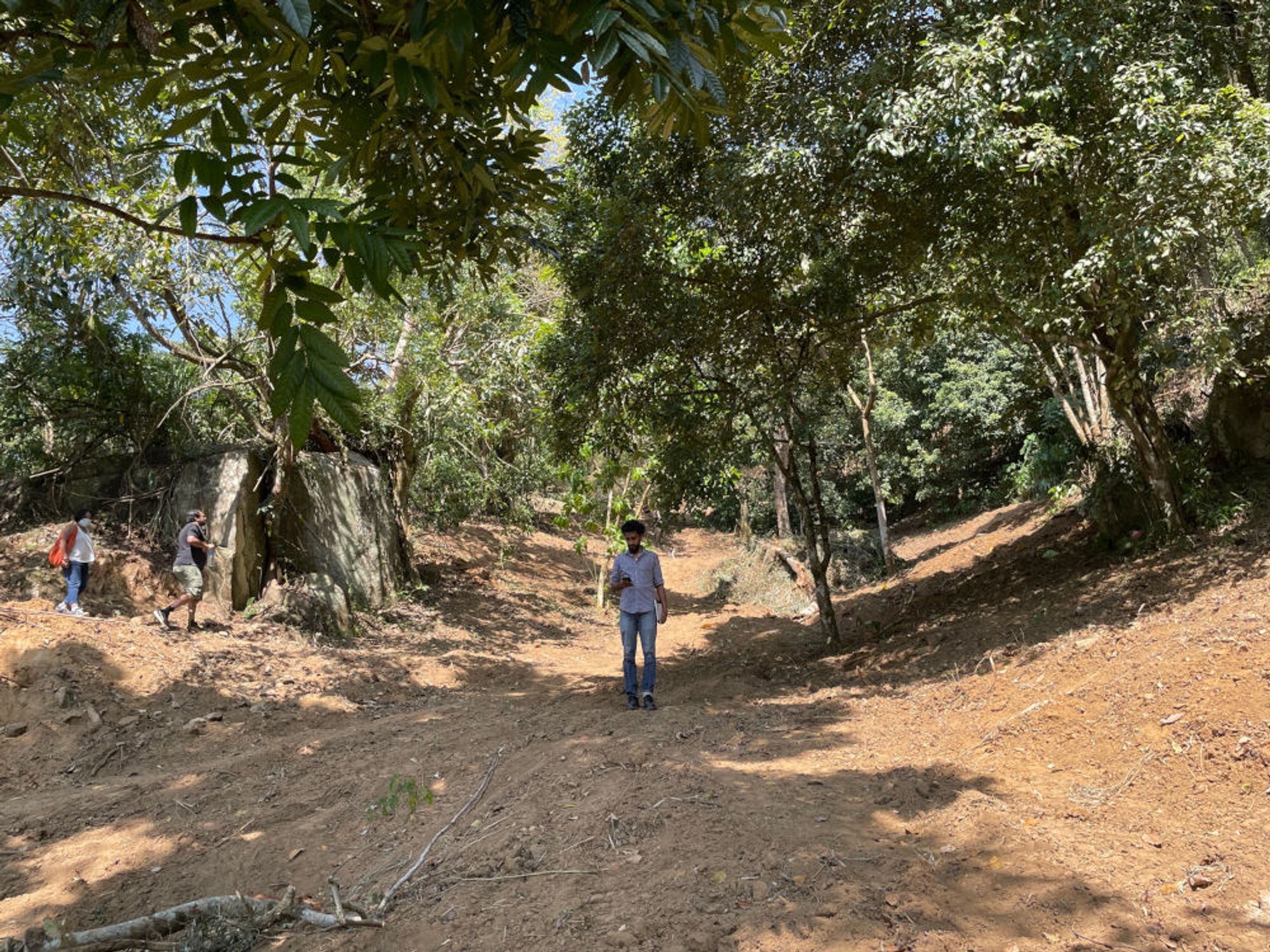
Photos and survey of the land at the time of purchase and map
The building
My original plan was to build using materials from the land itself — earth, primarily. I went through practically every earthbag house video on YouTube, as well as the logs on The Mud Home. Then got more serious: modern engineering, ancient architecture, Nader Khalili’s work at CalEarth, Guedelon Castle, wind towers from Tunisia. The early designs were A-frame longhouses following the curve of the land.
In practice, earthbag construction and the A-frame concepts ran into the realities of working with local builders on a steep mountain plot. After enough iterations, we conceded to concrete and brick, with the interior hewing to a combination of brutalism and coziness buttreesed by brick walls.
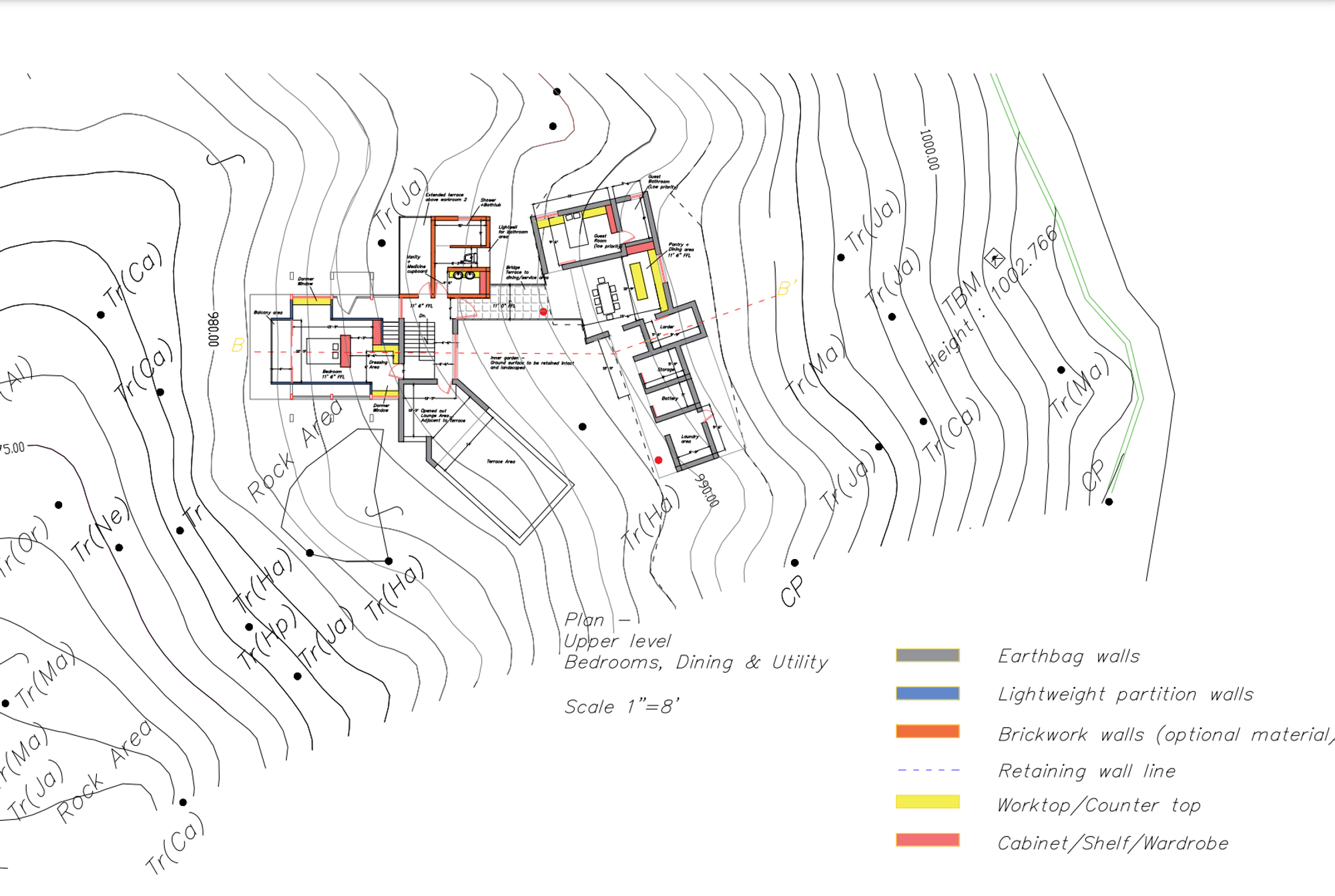
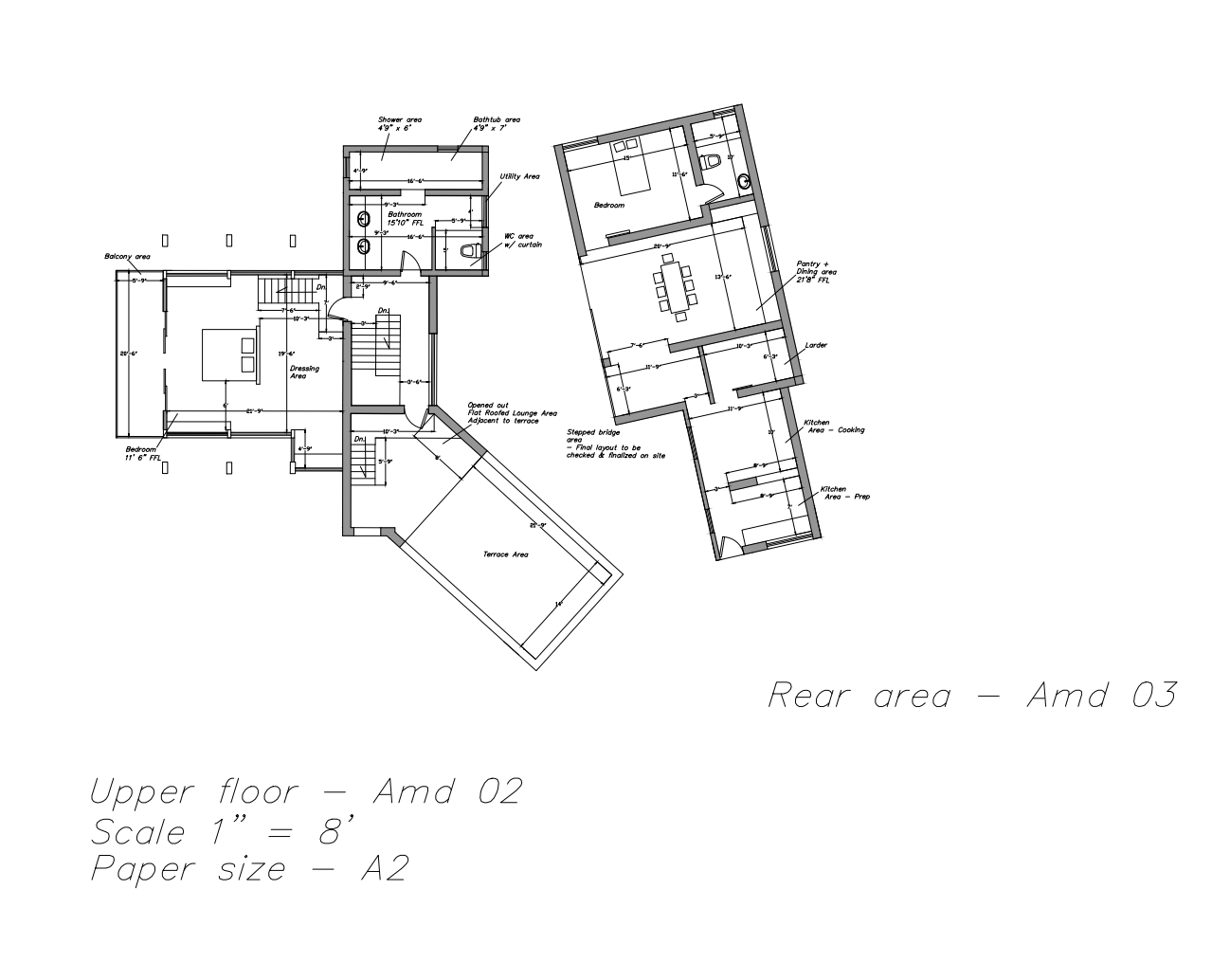
Iterations of house design
We moved away from the original A-frame longhouse-style design to something a little more spacious and complex, following the curve of the land.
We also commissioned a road to fix some of the more difficult bits. Concrete, expensive, but with this it should be possible to get vehicles up and down to the land without falling off the mountain altogether. It also is useful for the village, which has not seen road construction since 1992, according to the village headman (who lives next door and seems to occasionally conduct thoila rites to placate the gods of the forest and so on).
The Present
What we ended up with is a good-sized space: multiple studios designed for creative work, proper workspaces, and a lot of off-grid resiliency for when we need it.
We:
- store some 7,000 liters of water on-site, with some of that being harvested rainwater from roof run-off
- have a shade-netted greenhouse and multiple tiers of growing space immediately around the house so that we can grow herbs, fruit and vegetables
- have a hybrid electricity system: solar panels generate about 19.5 kWh of energy every day, and a 14.3 kWh battery stores energy. This means we don’t have to pull from the grid at all.
- have backups for electricity (petrol generator, Ecoflow River) that function as reserves - we learned the importance of this the hard way during Cyclone Ditwah
- have deer, monkeys, an eagle, and cats. Only the latter is by choice. The rest hang around and eat our mulberries