The floating city of Witness
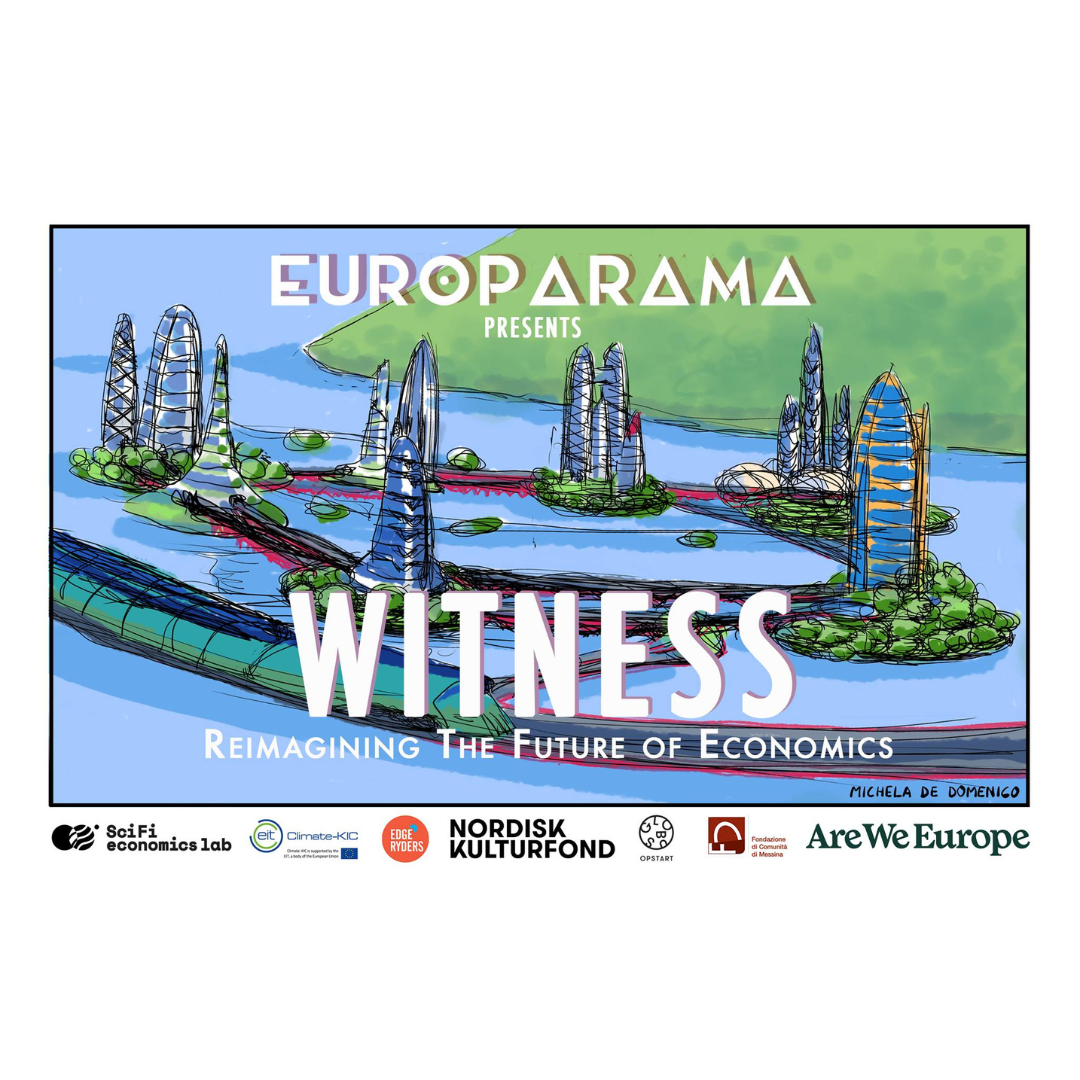
Witness began as a fictional city - an open-source, collaboratively-built seasteading megacity, designed by the SciFi Economics Lab and the Edgeryders research network to stress-test ideas about alternate economies. I’d been contributing to the Witness universe for a while: the idea was to get the underlying economics and political philosophy right, to build something rigorous enough to be useful as a futures design tool.
Witness is divided into Distrikts. For example:
Hygge - a welfare state that provides for every citizen’s basic needs, runs steady public investment, and maintains tight democratic control over digital infrastructure. On paper, it gets everything right. The question is whether it can adapt when the unforeseeable happens.
The Covenant - an enormous floating monastery, inspired by Benedictine tradition, where economic productivity and religious devotion are the same thing. The wealth goes to the glory of God, not the owners of production. It outstrips most societies in industrial output. But what happens when faith is tested?
The Assembly - born from the fandom of an electro-metal band (really), an anarchist collective running on crowdfunding and socialised blockchain instead of taxation and banks. Everyone is a polymath working for the common good. But if everyone pursues their passion, who deals with the most boring dangers?
You can spin off a Distrikt anytime.
The constraints are:
- it’s a floating city, adrift on the ocean, so you can’t run off or magically summon resources from nowhere. You have to get along without being economically crushed by your neighbours
- no magic solutions. No sufficently advanced technology that is indistinguishable from magic.
- open source. No copyright on these ideas.
It even includes fictional religion!
For a PDF containing the full world, check out the Witnesspedia. It’s essentially a work of worldbuilding - the founding history (conceptualised during the Post-Plague Years by a disenchanted UN official, designed in far more modular fashion than the other Project Viking cities), the digital infrastructure of each Distrikt (Hygge’s Great Firewall and CIVICSMOD democratic oversight, The Covenant’s dual internet of the City of God and the secular network, the Assembly’s data cooperatives and CRTLcoin), and the general chaos of what it looks like when twelve very different societies have to share the lowest-level infrastructure while disagreeing passionately about everything above that layer.
Witness: the Game
The card game grew out of that project. It was developed in collaboration with Edgeryders for the NGI Impact Conference in November 2021, funded under the EU’s Horizon 2020 research and innovation programme.
- Setup: Each player takes charge of a Distrikt and its unique Policy Cards - the actual instruments available to that society, derived from the logic of how it’s organised.
- Play: Draw from an Event Deck. Pandemics, deadly heatwaves, market crashes, technological breakthroughs. Each event hits your three health indicators - Economy, Infrastructure, and Public Opinion - differently depending on which society you’re running.
- End condition: Ten Event Cards, or a player’s indicator hits zero and can’t recover.
- The social endgame: Players compare notes, discuss their policy choices, and reflect on what they learned about governance, resilience, and the implicit assumptions baked into different social contracts.
Asymmetry is the point. Ie: the Assembly’s decentralised mutual aid networks respond very differently to a market crash than a theocracy’s divine mandate does.
The SciFi Economics Lab’s original thesis is that fiction is a useful tool for exploring futures precisely because it lets you suspend the reflexive defences people bring to direct political argument. You’re defending your Distrikt, your specific society, against this specific crisis, and the game makes the tradeoffs legible. A capitalist cyberpunk world really does respond differently to a religious autocracy. The cards force you to think through why.